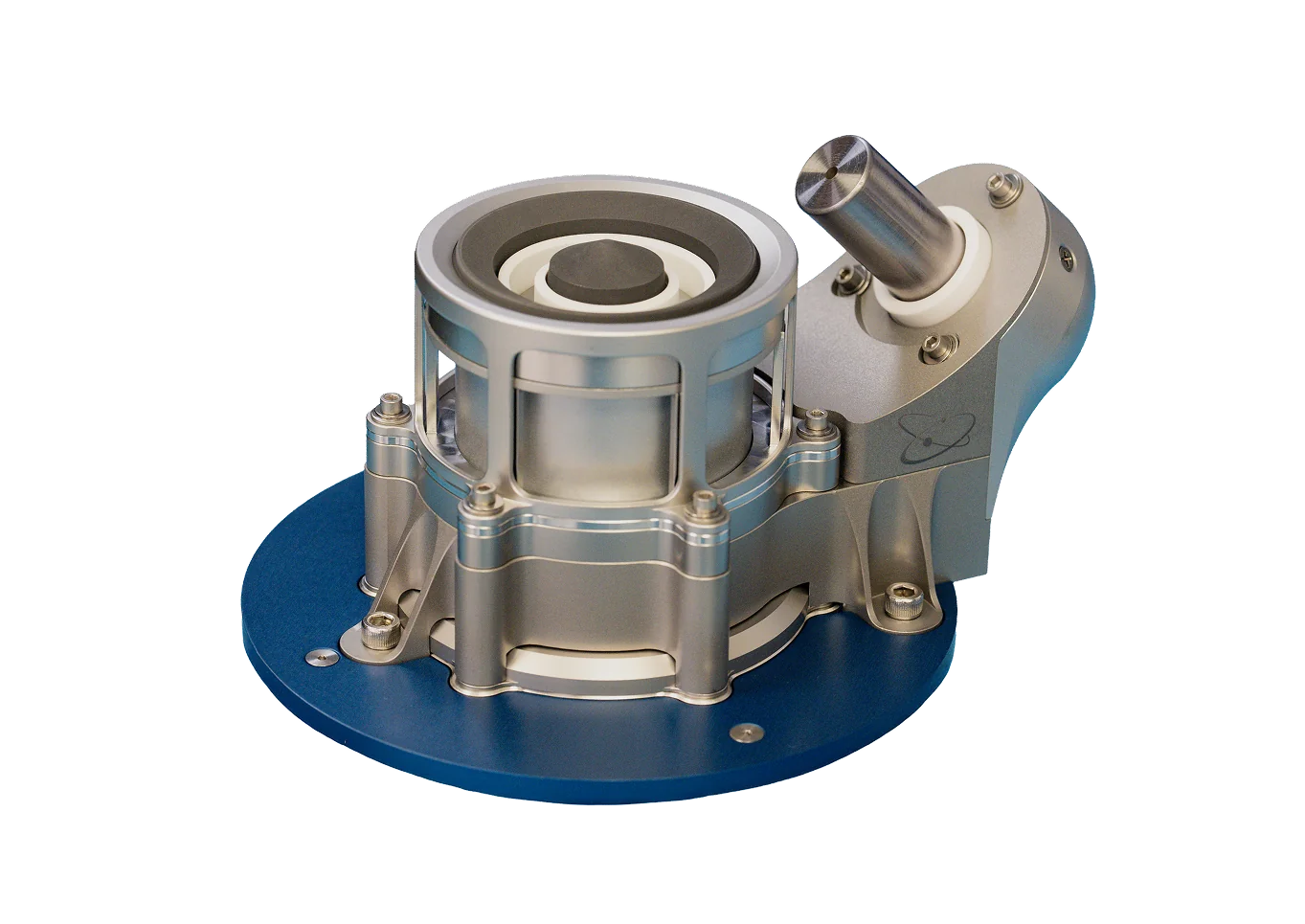

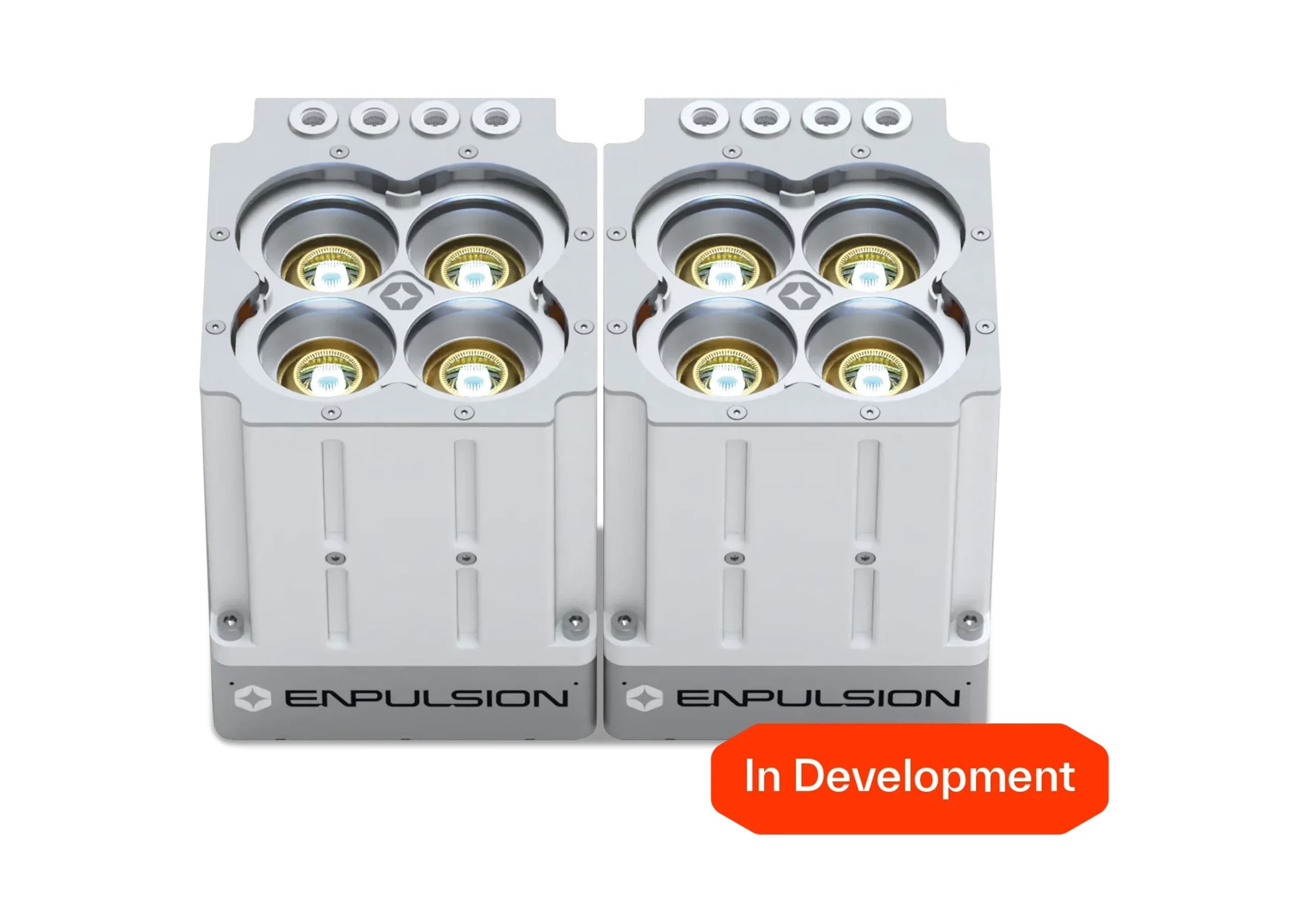
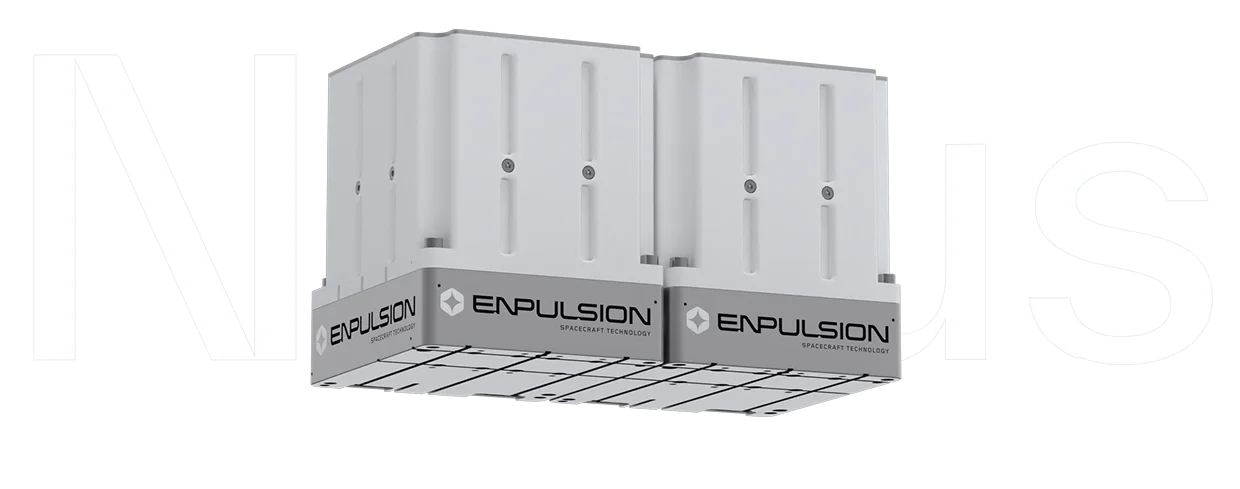
MICRO R⁴ is being developed for larger satellites that need more thrust. Single units are planned to enter our catalog in Q1 2028 and Nexus clusters of up to four units in Q2 2028, once qualified and proven in production.
MICRO R⁴ will join MICRO R³ in our catalog, serving larger satellites. Designed for constellations, responsive missions, orbit raising and deorbit, it brings scalable FEEP mobility to bigger platforms. Like every Enpulsion block, it will be offered only once qualified.
Not yet available to order. Talk to us to plan ahead.
Features
Development Targets for MICRO R⁴
Mature Technology
Heritage Foundation
Built on the experience of 280+ Enpulsion propulsion systems in space, MICRO R⁴ leverages years of production insight across diverse mission profiles.
Robust by Design
Built-In System Resilience
Target: designed to tolerate handling, integration and operation beyond the nominal, with resilience built into the system.
High Impulse. Low Mass.
Compact Performance Boost
Target: up to 4,500 s specific impulse; as a Nexus Quad, up to 120,000 Ns total impulse and 6 mN nominal thrust.
Scalable Thrust
From One to Four Units
Target: 1.5 mN nominal thrust per unit, with increased thrust at beginning of life, clustered from one to four units as one system.
Streamlined Integration
Simple to Mount
Target: a design without tanks or fluidic systems, mounted via standard panels and harness for simple integration.
Debris Safety
Inherent Operational Safety
With no pressurized tanks or stored chemical energy, the system eliminates explosive risk during active operation or in-orbit collisions, enhancing overall spacecraft safety.
Indium Propellant
Stable, Safe Fuel Source
Indium is a nontoxic, unpressurized metal sourced as a by-product of zinc refining. More than 1,000 tons are produced annually, offering a stable, accessible, and safe propellant option.
Use Cases
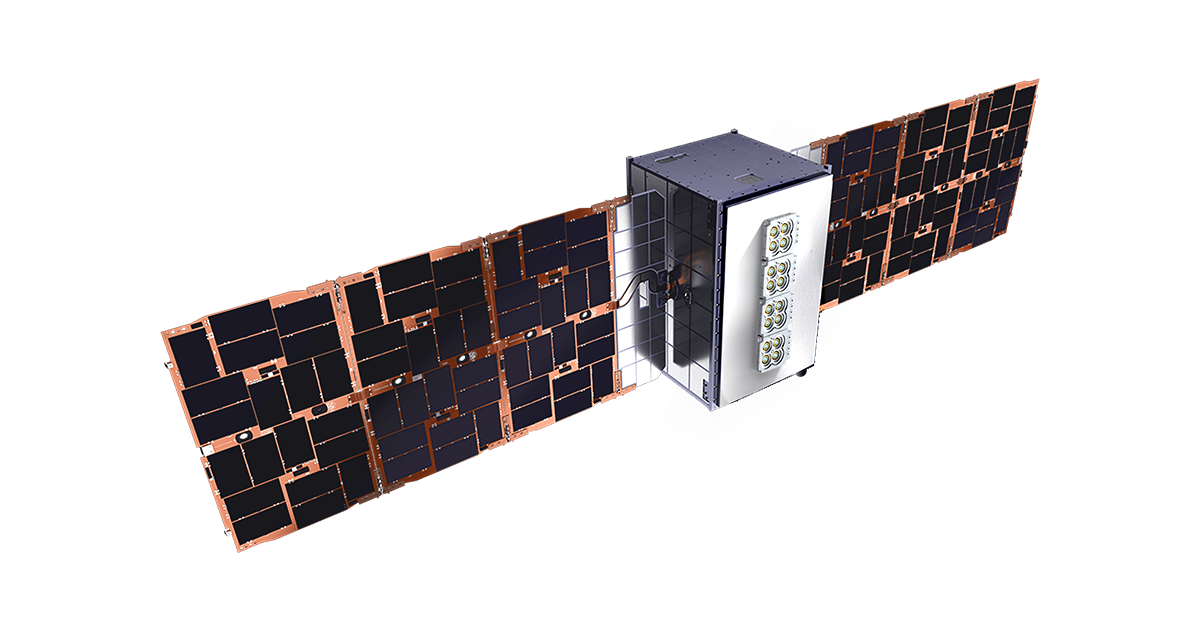
Orbit raising and deorbit for 150–500 kg platforms
Constellation phasing, maintenance, and maneuvering
Solid indium propellant, no pressurized tanks
Agile institutional and defence missions
(e.g., EO, security, tech demos)
One to four units working as one Nexus system
ITAR-free supply, produced in Europe (Vienna)
Stationkeeping and deorbit support for larger platforms
(using secondary thrusters)
Indium Powered Propulsion
Indium is a nontoxic, unpressurized metal sourced as a by-product of zinc refining. More than 1,000 tons are produced annually, offering a stable, accessible, and safe propellant option.
Next-Level Maneuverability
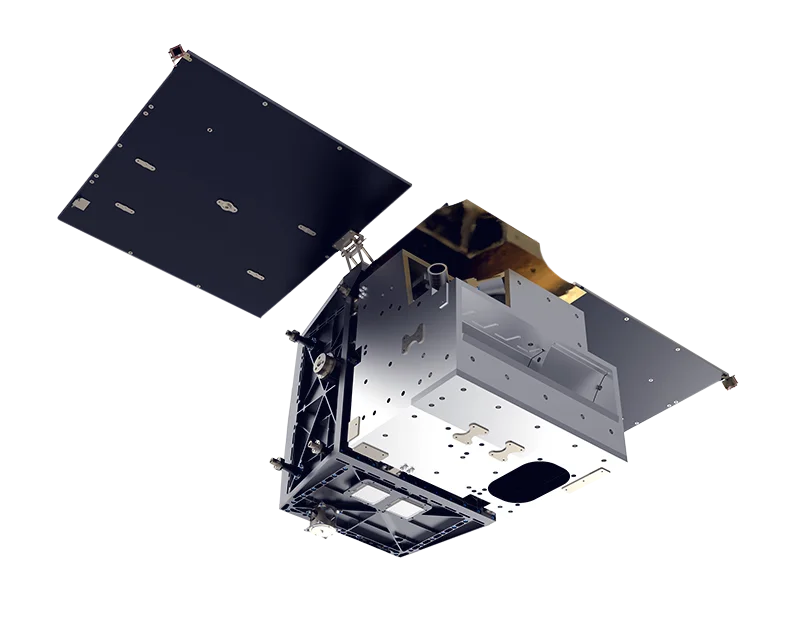
Indium propellant liquifies in orbit to generate finely tunable thrust, delivering efficient, precise maneuverability throughout the entire life of the mission.
Field Emission Electric Propulsion (FEEP) is a type of electric propulsion that uses electrostatic fields to extract and accelerate ions from a liquid metal propellant, producing thrust. It is known for its extremely precise thrust control, making it ideal for applications that require high-precision positioning in space.
How it works:
Liquid Metal Propellant – uses low-melting-point metals like Cesium or Indium as fuel
Electrostatic Extraction – a sharp metal emitter is charged to a high voltage forming a strong electric field
Ion Emission – the field is strong enough to extract individual metal ions from the liquid surface, forming an ion beam
Acceleration – these charged particles are accelerated to high velocities by the electric field to generate thrust
Charge Neutralization – an external electron source (neutralizer) ensures the spacecraft remains electrically neutral
Our catalog today includes the FEEP blocks NANO R³ and MICRO R³. Together with Orbion Space Technology, a York Space Systems company, we are adding Hall-effect propulsion for higher-power needs, planned from mid-2027. We match the block to the range your mission needs and describe the properties of our blocks, not the weaknesses of other technologies.
Every new block enters our catalog only once it is qualified for flight, including its full lifetime tested on ground, and once its production has been proven. You buy what is already qualified and can already be built reliably.
Indium (In) is a soft, silvery-white metal with atomic number 49. It is commonly used in electronics, semiconductors, and coatings due to its excellent conductivity. Indium is non-toxic, nonreactive and nonradioactive, making it a safe and easy to handle.
INDIUM HAS SEVERAL IMPORTANT ADVANTAGES AS A PROPELLANT:
It is compact due to its high density, so the propellant fits inside one self-contained block, pre-filled and ready for launch.
Thrusters are shipped full — Propulsion systems using other propellants usually have to be shipped empty and filled at the launch facility, introducing additional expenses and procedures.
It is safe — Indium is non-toxic and easier to handle than other propellants. It is stored, unpressurized and, unlike high pressure tanks, it does not need special authorizations (launch waivers) to be launched as secondary payloads, and is RoHS and REACH compliant.
It is readily available — Indium is currently a by-product of zinc refining and benefits from industrial scale production. Since peaking at $700 / kg in 2007 indium prices have stayed below $400 / kg.
FEEP thrusters can be used for precise spacecraft maneuvers, including station-keeping, orbit raising, formation flying, collision avoidance, and drag compensation. Their high precision and controllability make them ideal for missions requiring fine attitude adjustments.
Most electric propulsion systems operate at a fixed power point, so they are typically characterized by a single thrust and specific impulse value. FEEP thrusters are different. They operate across a wide power range, and as a result, both thrust and specific impulse vary with input power.
This is why the data sheet shows a curve rather than a single point. As power increases, thrust and Isp both change, and not always in a linear way. Higher power generally produces more thrust and higher Isp, but the relationship depends on how the thruster is tuned.
This flexibility allows the system to adapt performance to the mission. You can operate it more efficiently when needed or increase thrust for faster maneuvers. The performance curve captures this range of operating modes.
Yes, our products are classified as “dual-use” items and as such are subject to dual-use export controls. Therefore, depending on the end-use and country of destination, an export license may be required. Deliveries within the European Union and the United States generally do not require an export license.
To provide the best experiences, we use technologies like cookies to store and/or access device information. Consenting to these technologies will allow us to process data such as browsing behavior or unique IDs on this site. Not consenting or withdrawing consent, may adversely affect certain features and functions.
Functional
Always active
The technical storage or access is strictly necessary for the legitimate purpose of enabling the use of a specific service explicitly requested by the subscriber or user, or for the sole purpose of carrying out the transmission of a communication over an electronic communications network.
Preferences
The technical storage or access is necessary for the legitimate purpose of storing preferences that are not requested by the subscriber or user.
Statistics
The technical storage or access that is used exclusively for statistical purposes.The technical storage or access that is used exclusively for anonymous statistical purposes. Without a subpoena, voluntary compliance on the part of your Internet Service Provider, or additional records from a third party, information stored or retrieved for this purpose alone cannot usually be used to identify you.
Marketing
The technical storage or access is required to create user profiles to send advertising, or to track the user on a website or across several websites for similar marketing purposes.